
Ear conditions
Cryptotia in newborns
In cryptotia, the top of the ear is partly tucked under the skin of the scalp, so the usual groove behind the upper ear is missing. It is sometimes called “hidden ear” or “buried ear.” If you gently lift the top of the ear, it may come out and then slip back.
Medically reviewed by Dr. Steve Byrd, MD on
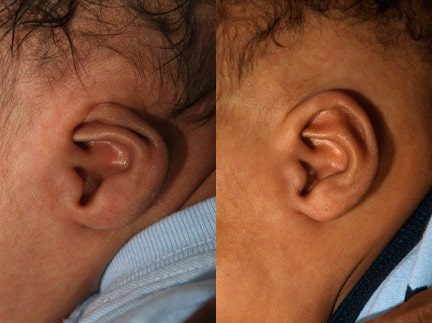
What cryptotia looks like
From the side, the upper ear seems to disappear into the scalp. From behind, there may be no fold between the top of the ear and the head. The ear cartilage itself is usually present, and other shape features, such as a fold in the upper rim, are common.
How it is assessed
The clinician checks how much of the upper ear is covered, whether it lifts easily and whether the cartilage is fully formed. They also look for other features that may be part of a mixed shape.
Is molding considered for cryptotia?
It may be. Molding can help hold the upper ear out from the scalp so a natural groove can form while the cartilage is soft. Published clinical reports have described neonatal molding for cryptotia, and the clinician will explain what is realistic for your baby. When to start.
Related terms
Cryptotia may also be called “hidden ear,” “buried ear” or “pocket ear.” It is different from microtia, where part of the ear did not develop.
Sources
- Congenital ear malformations: effectively correcting cryptotia with neonatal ear molding. Rozanski C, Rousso JJ. Article copy hosted by EarWell Centers (journal details to be verified). 2017.
Questions about cryptotia
What does cryptotia look like?
The upper part of the ear is tucked under the scalp skin, so the groove behind the top of the ear is missing. It may lift out gently and then slip back.
How is cryptotia assessed?
A clinician examines how much of the ear is covered, whether it lifts easily and whether the cartilage is fully formed.
Can ear molding help cryptotia?
Molding may be considered while the cartilage is soft. The clinician will discuss what to expect for your baby. Candidacy.
Is cryptotia the same as microtia?
No. In cryptotia the ear is tucked under the skin. In microtia, part of the ear did not develop. Microtia and anotia.
Questions about your baby’s ears?
Request an evaluation with EarWell Centers or call our team. We will help you understand the next step.